Editorial
Indian Historical Tradition
The Indian historical tradition is for the welfare of the people. It is based on the study and contemplation of all aspects of man and nature. The dissemination of knowledge throughout the entire human community has been visible in India since ancient times. India's gift to the world—the paramountcy of human thought—is significant, yet when we look at other fields, India's science, mathematics, and astronomy hold special importance. The article on Indian science's contribution to ancient China points in this direction.
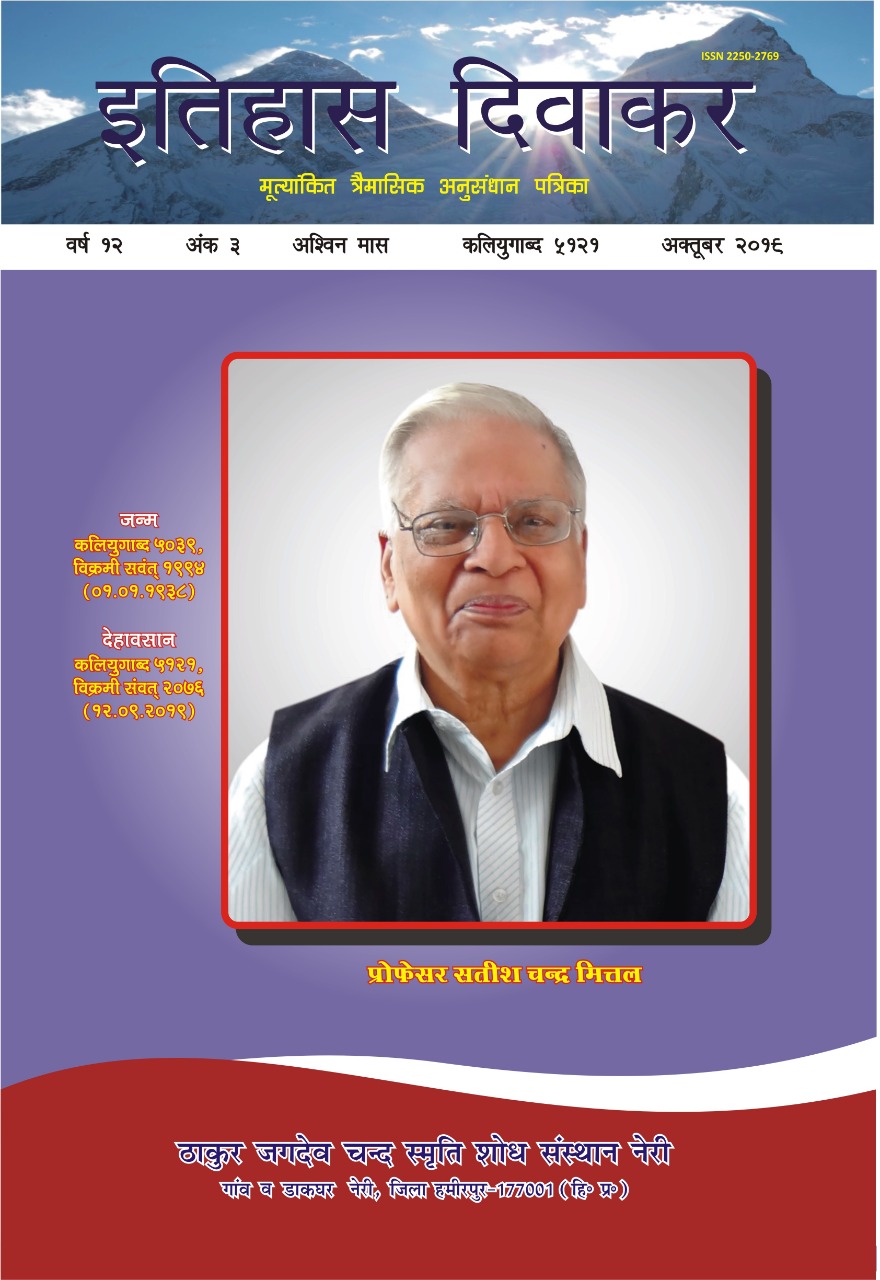
The Itihas Diwakar magazine and the Itihas Shodh Sansthan Neri family offer humble tribute to the great saint of Hindu Dharma and culture, social servant, and flag-bearer of Hindu Dharma, Swami Satyamitranand Giri Maharaj, who attained Brahmaleen on Kaliyugabda 5121, Vikrami Samvat 2076 (June 25, 2019). Swamiji was a proponent of social harmony and was determined to eradicate the weaknesses in Hindu society. He built the Bharat Mata Mandir in Haridwar, whose message awakens the integral power of the Indian nation. The service work he did for the Vishva Hindu Parishad, cow protection, and the forest dwellers living in mountain caves will be remembered for centuries.
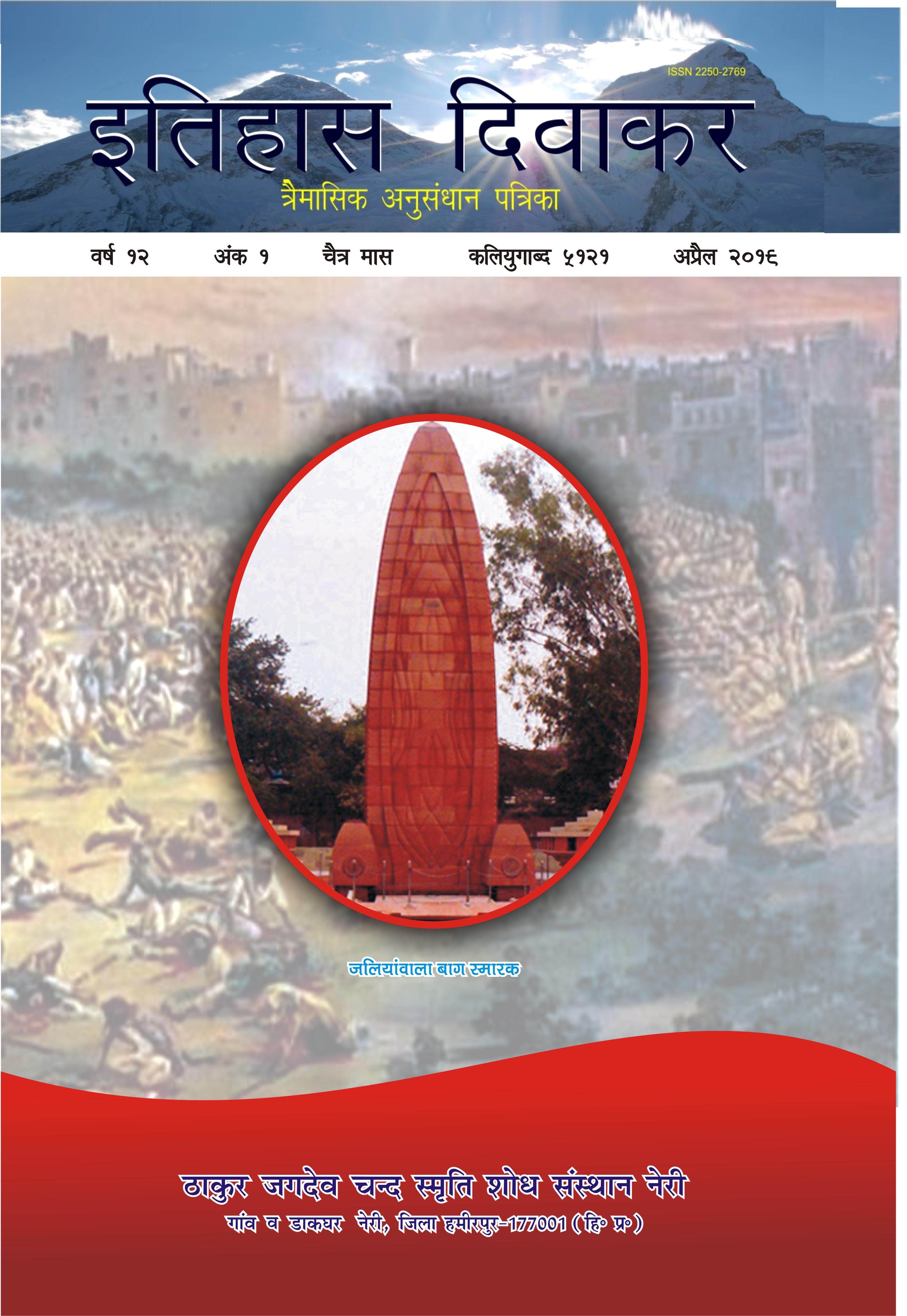
When we impartially observe the elections held in India in May 2019, it becomes clear that the Indian electorate has now, by abandoning caste and community, shown its resolve to entrust the integrity of Mother India into the hands of a strong leadership, embodying universal unity. This is the result of the common Indian's wisdom. In this chain of trust lies the progress of the universal whole.
It is a matter of pride for Himachal Pradesh to have Sanskrit recognized as the second language. Congratulations to Sanskrit Bharti and the Himachal government for their meaningful efforts. In this issue, the scripts in the ancient Saancha texts and the heroic ballad (Yashogan) of the great warrior Natiram (Notiram) give us special inspiration.
The Rishi tradition is a distinguished heritage of Indian society. Rishis are the creators of knowledge. They experienced that knowledge and gave it to society in the form of sutras and mantras. The research institute in Neri is organizing a national symposium on the topic 'Rishi Tradition in the Western Himalayas' in Kaliyugabda 5121, Vikrami Samvat 2076 (November 10, 11, 12, 2019).
Indian Science's Contribution to Ancient China
Dr. Dharmachand Chaubey
Two great civilizations of the world have been flowing on this side and that side of the Himalayas since time immemorial, showing us many aspects of geographical and cultural similarity. In the last decade of the 16th century, a doctor from Mathura went to China with the British Indian army. He traveled outside the confines of the port towns to the countryside and other cities of southern China and was astonished at how much similarity there was in the thinking, customs, attire, scientific practices, language, dialect, songs, mathematics, chemistry, medical systems, knowledge of herbs, and marriage rituals of the inhabitants on both sides of the Himalayas. He said that if the Himalayan mountains did not exist, both countries would be a single geographical and cultural entity like 'Eurasia'.
Gangtok, situated on the western bank of the Himalayan valley and the Ranipool River, is located on that historic highway that went from Lhasa in Tibet to the Tamralipti port and from there to the Srivijaya empire of Southeast Asia. It was through this route that Indian culture, religion, and science once traveled to China. This research paper presents a description of India's contributions to China in the fields of science, particularly mathematics, medicine, and astronomy.
Information from the history of China's Song dynasty, compiled in the fifth century, reveals that like India, China also had knowledge of 28 constellations and the nine planets. Their sun also revolved through 12 zodiac signs, just like in India. Later, during the Tang dynasty in China, several books on Indian astronomy were brought, and Chinese scholars developed the astronomical knowledge prevalent in modern China. After the third century, the exchange of goods and ideas between India and China increased rapidly. In Tang China, 21 Indian astronomical books were translated into Chinese. The Matangisutra was also translated into Chinese. An astronomer named Dharmaruchi translated 30 astronomical texts into Chinese. The book Mahasannipata Sutra by the Indian astronomer Kharoshtha was translated into Chinese. This was the time when the science of Gupta-period India was spreading throughout the world.
Scripts of Himachal's Saancha Manuscripts
Dr. Om Prakash Sharma
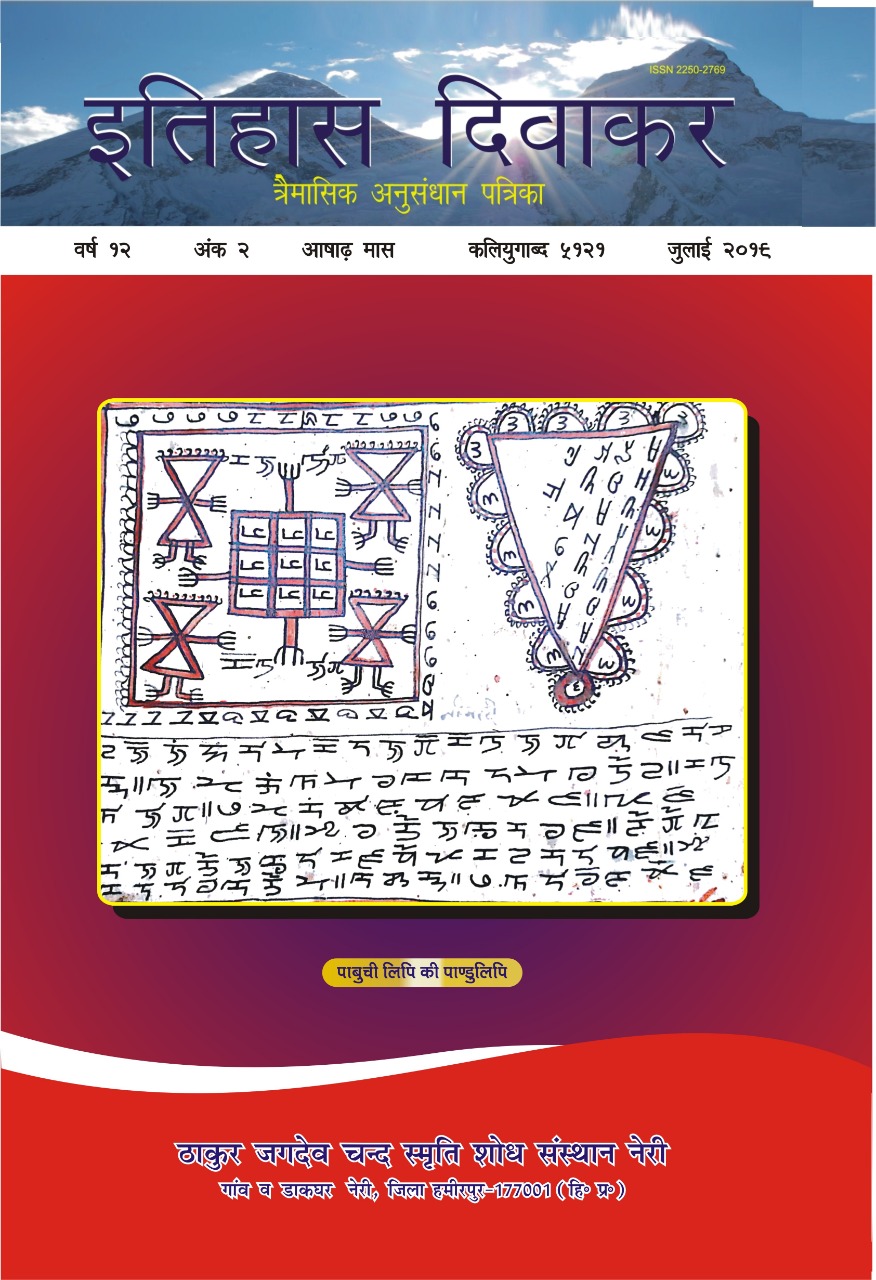
Countless 'Saancha' manuscripts are available in the villages of the Shimla, Sirmaur, and Solan districts of Himachal and the Jaunsar-Bawar region of Uttarakhand. These Saancha texts are composed in the Pabuchi, Bhattakshari, Pandvani, and Chandani (Chandvani) scripts. Before shedding light on these scripts, it is necessary to outline the subject matter contained within these Saanchas. In essence, the subject matter of Vedic literature is present in these Saancha texts in sutra form.
The Vedas, Brahmanas, Aranyakas, Upanishads, and Vedangas are the foundational pillars of Vedic literature. The knowledge contained in the entire Vedic corpus or Vedic mantras was also incorporated into later Smriti texts, the Ramayana, Mahabharata, philosophical texts, and Puranas. This knowledge has been shaping the philosophy of life in society since ancient times. These foundational texts of knowledge came before the world community in the form of oriental studies. Vedic knowledge or mantra is divided into three parts, which are called Trikanda. These Trikanda—Jnana Kanda, Karma Kanda, and Upasana Kanda—are famous. The Jnana Kanda contains philosophical principles of creation, existence, and dissolution. Vedanga Jyotisha presents details according to the principles of time calculation for tripartite knowledge. The Karma Kanda contains principles for the resolution of sorrows arising from the three afflictions: Adhidaivika, Adhibhautika, and Adhyatmika. The sixteen sanskaras are strong evidence of this. The Upasana Kanda contains philosophical sutras of life's philosophy along with the principles of Tantra, Mantra, and Yantra. These above-mentioned Indian scriptures or sciences, renowned as oriental studies, encompass the aspects of Satyam, Shivam, and Sundaram. These aspects speak of public welfare.