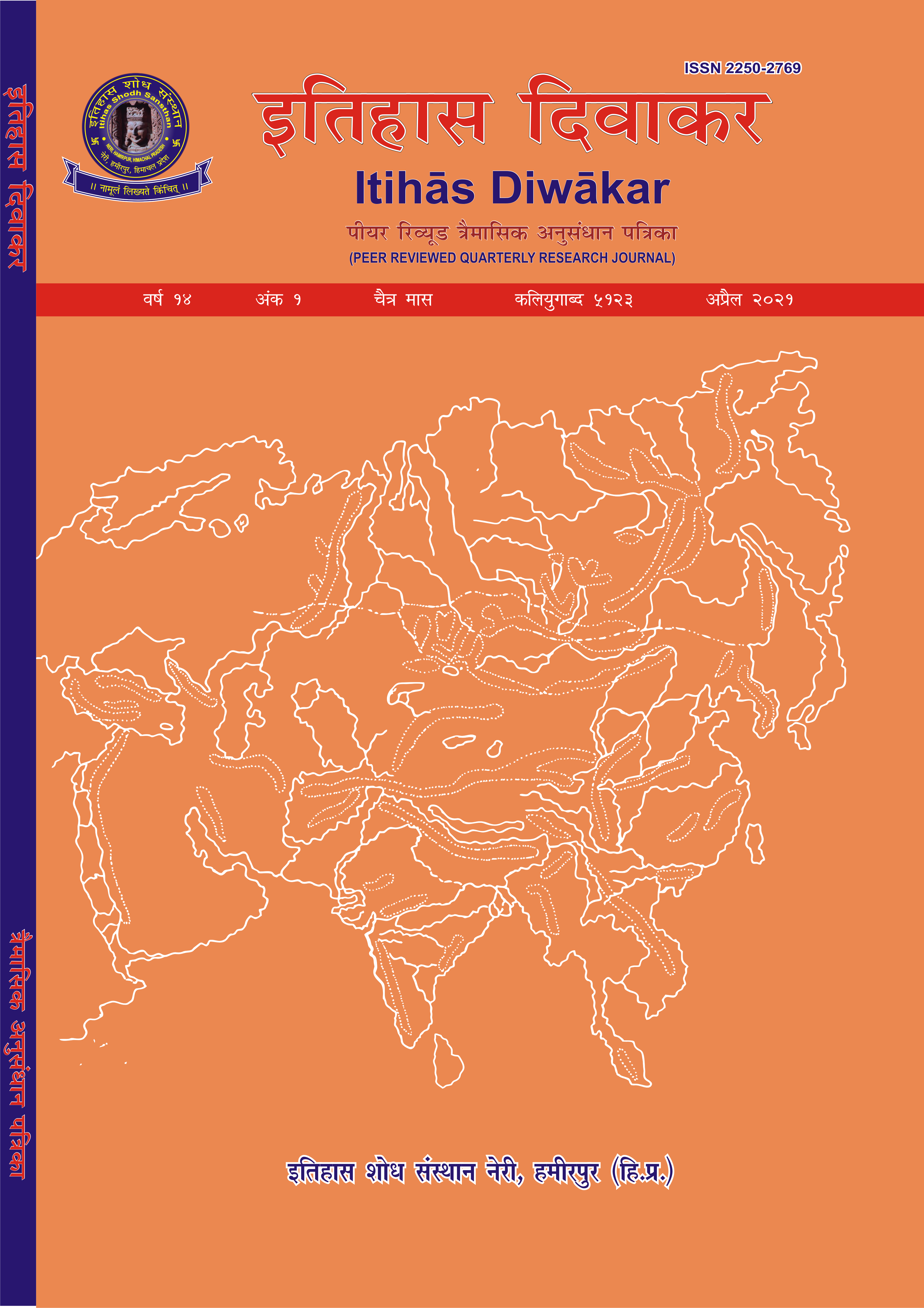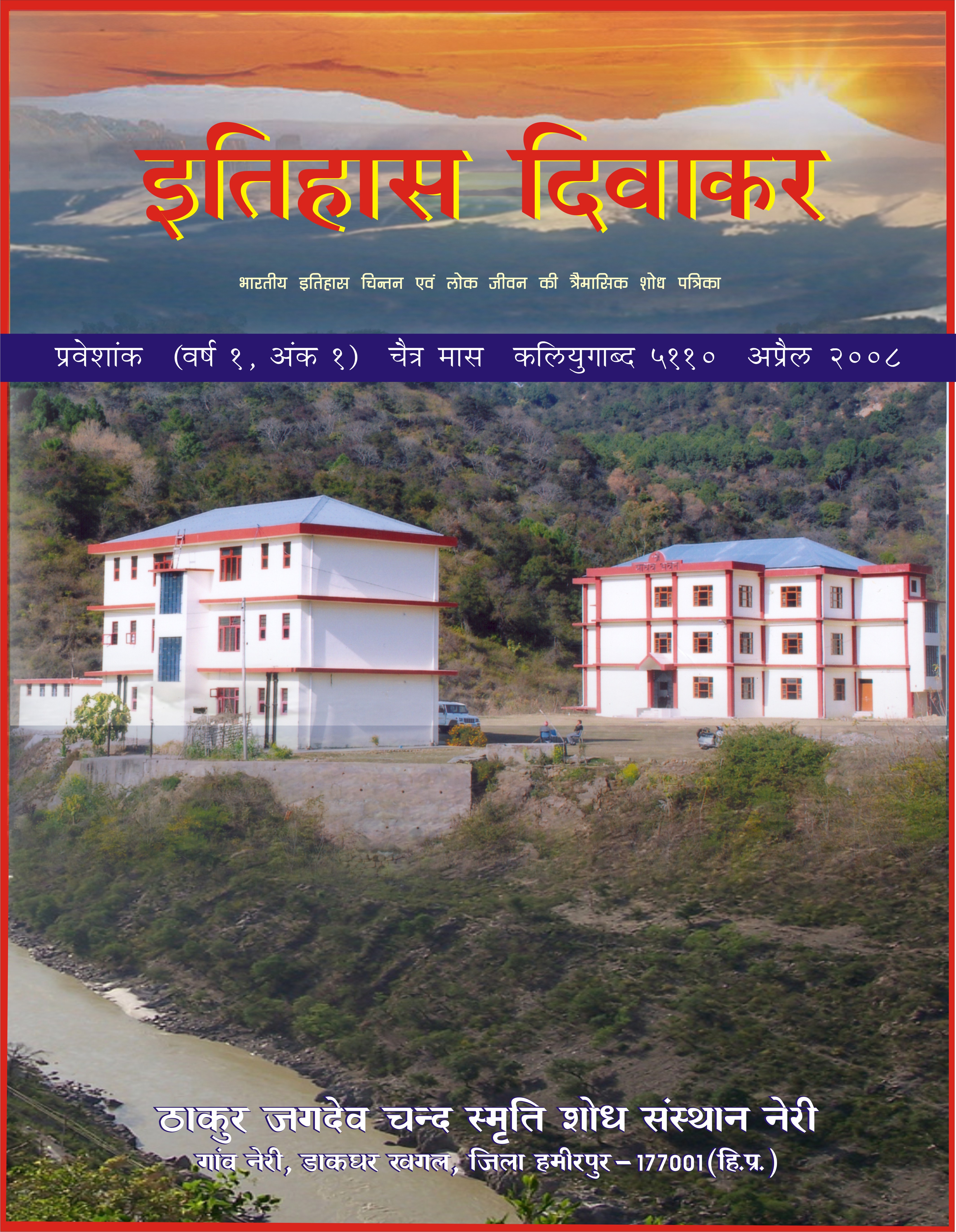
Itihas Diwakar - April 2008
The Purusha of History
The creation era (Srishti Samvat) begins with the Shveta Varaha Kalpa (the aeon of the white boar), hence the 'Purusha of History' has the face of a boar. Because the vast form of Time is contained within the belly of history, he is called Mahodar (one with a large belly). The color and form of earthly history are illuminated by the representative best substance of the earth, Kusha grass, hence he is called Kushabhas (shining like Kusha grass). History is woven with numerical instructions of time, so the Purusha of History holds a string of beads (akshasutra) in one hand. As the sacred purpose of history is to impart the nectar of knowledge, his other hand holds a pot of nectar. The body of the Purusha of History is adorned with lotus ornaments – the lotus being a symbol of beauty, development, and joy, which is the sacred form of history.
Editorial
Victory to Raghuveer, the Capable
It is an extremely pleasant coincidence that the inaugural issue of Itihas Diwakar is being published on such an auspicious occasion as the 400th birth anniversary of the most revered national saint, Samarth Guru Ramdas, on Ramnavami this year. Samarth Guru Ramdas was a great devotee of Lord Ram who, with the thirteen-syllable great mantra 'Shri Ram Jai Ram Jai Jai Ram,' awakened the dormant power of the inert society and spread the light of consciousness of spiritual power and national devotion everywhere. He instilled the faith of 'Jai Jai Raghuveer Samarth' among the people and inspired society that if we perform our duties with full dedication, all tasks are successfully completed by the grace of the all-powerful Lord Raghuveer.
It is also an auspicious coincidence that the publication of Itihas Diwakar and the new year of Kaliyugabda 5110 are starting together. In Indian tradition, the first day of the Chaitra Shukla month is called Varsha Pratipada. This day is the first day of the new year. Many eras are prevalent in India, among which the Vikrami Samvat and Shaka Samvat are most commonly used. The use of Vikrami and Shaka eras, which flourished on Indian soil, undoubtedly reflects our national pride, but it is also important to know that these eras, being related to a specific person or event, cannot be the scientific basis for time calculation. Chronology is directly related to time; therefore, only a chronology linked to time can be considered scientific.
Let's Recognize Ourselves
Author: Kupp. C. Sudarshan
Rishi Aurobindo has said, 'The nation whose youth possesses the glory of the past, the pain of the present, and dreams of a golden future, that nation progresses on the path of advancement.' Until we know what we were, whether we have risen above it or fallen, we cannot decide what we need to do in the future. This state of ambiguity must end. What were we? This has been distorted. Even today, we are taught the same thing - we were always slaves, we have no achievements. If we have to take anything, it is from foreign countries.
A Nation from Hindutva
I started attending the Sangh's shakha from my childhood. Listening to the intellectual sessions in the Sangh's programs, I understood how cunning the British were. They knew very well that India is one country. Initially, seeing the different languages, cuisines, and worship methods, they were perplexed as to how this could be one country. But they saw that Hindutva is an element that unites the entire country. A person from Assam also calls himself a Hindu, as does a person from Punjab. A person from Kanyakumari calls himself a Hindu, and so does one from Kashmir. Hindutva connects everyone. The British thought, why not break this very thread? This would cause everything to scatter. They started promoting the word 'Hindu' as a derogatory term.